
GENERATION AI
SCHOOL ASSEMBLY PROGRAM

“Eddie was engaging, high-energy, and extremely relevant for our students, who are growing up in the first generation where artificial intelligence is a part of everyday life.”
– Jill Lynch, Technology Teacher, Markham Place Middle
Download Eddie’s Program Guide & Speaking Rate
✔ Top-Rated Youth Speaker for Students
✔ All-Inclusive Speaker Fee — No Travel Expenses
✔ The Best Speaker You’ve Ever Booked, or Your Money Back
GENERATION AI
SCHOOL ASSEMBLY PROGRAM
Equipping Students for Safe, Wise, and Responsible AI Use with Top Youth Speaker Eddie Cortés
RATING: ★★★★★ 4.98 ⋅ 200+ BOOKINGS
Target Audience: Elementary, Middle & High School Students (Grades K–12) 30-60 mins
AI School Assembly Program Overview:
Students today are the first generation growing up with artificial intelligence as part of everyday life. AI can unlock incredible creativity and deeper learning, but it also raises urgent questions about digital wellness, academic integrity, and very nature of original thinking.
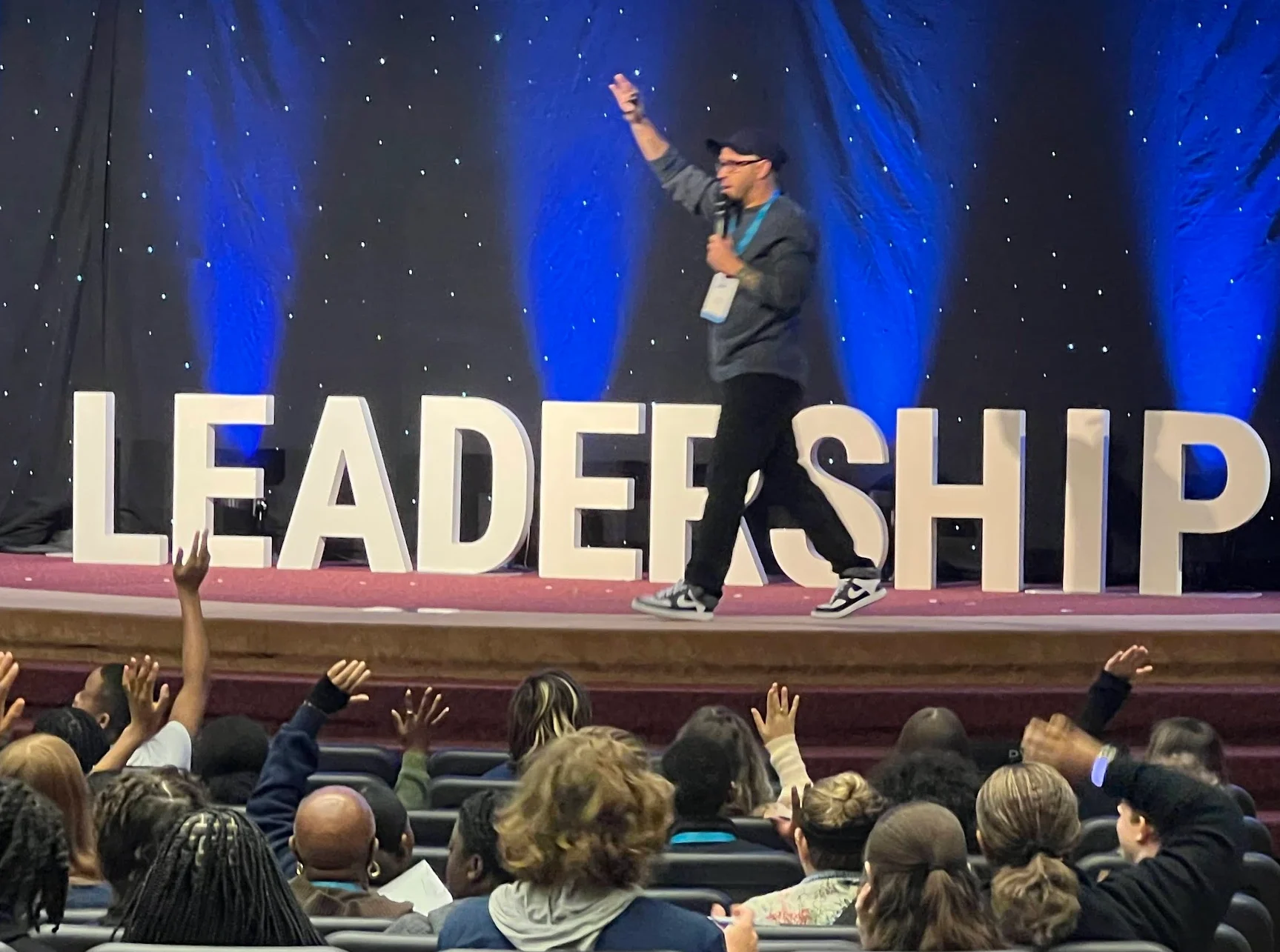
In this high-energy, interactive AI school assembly program, national youth speaker Eddie Cortés help students navigate the “Age of AI” with clarity, confidence, and character.
Through humor, storytelling, and live demonstrations, Eddie turns complex technology into concrete, actionable lessons. Rather than focusing only on the “dangers” of AI, this presentation emphasizes the uniquely human strengths that technology can never replace.
Students learn essential AI literacy skills: how to think critically about the tools they use, protect their digital identity online, and avoid harmful behaviors like cyberbullying or deepfake harassment. By developing the skill to use AI responsibly, students learn how to lead in a technology-driven world.
The Impact on your School Culture
When an entire student body shifts from passively outsourcing their thinking to actively building understanding, the everyday culture of your campus transforms.
- From “Shortcut Culture” to Authentic Curiosity: Students stop looking for ways to bypass the learning process and instead embrace the cognitive challenge, realizing that real growth requires personal effort.
- Proactive Digital Citizenship: Rather than reacting to disciplinary issues involving deepfakes, plagiarism, or online harassment, your school builds a shared, positive vocabulary around mutual respect and digital safety.
- Empowered Educators & Engaged Learners: Teachers spend less time policing AI and more time facilitating meaningful discussions, resulting in classrooms defined by trust, academic integrity, and higher-order critical thinking.
By the time Eddie walks out of your auditorium, your students won’t just have a clearer understanding of responsible AI use—they will have a renewed respect for their own minds, a stronger commitment to ethical choices, and the confidence to lead their generation forward.
Learning Outcomes AI Literacy and Digital Citizenship:
Every assembly, regardless of grade level, is built around three practical ideas students can immediately apply:
1. Be Human: Students learn that empathy, creativity, and original thinking are uniquely human strengths that no algorithm can replace. AI can assist learning as a valuable tool, but it should never replace their voice, effort, or perspective.
2. Be Wise: Students learn how to use AI as a co-pilot to jumpstart their learning instead of an autopilot that replaces their effort and thinking. They explore how AI works, why it can produce errors or bias, and how to think critically before trusting or sharing what it generates.
3. Be Safe: Students learn how to protect their identity and digital reputation in an AI-powered world. The program covers practical strategies for recognizing misinformation, avoiding harmful online behavior such as deepfakes or cyberbullying, and knowing when real human support matters most.
K–12 Adaptations for Schools
Specific frameworks designed for K-2, 3-5, 6-8 and 9-12 grade levels.
K–2 Assembly Adaptation
Duration: Approx. 30–35 Minutes
Theme: Smart Tools, Smart Choices
Hook: Through fun demonstrations and simple visuals, students discover how technology can help them learn, create, and solve problems.
Objective: Teach young learners that technology is a tool to help them think, create, and learn—not something that replaces their effort or imagination.
3–5 Assembly Adaptation
Duration: Approx. 40–45 Minutes
Theme: AI as a Learning Superpower
Hook: Students see how AI tools can help them brainstorm ideas, solve problems, and explore their curiosity when used responsibly.
Objective: Help students understand the difference between using AI to support learning and relying on it to do the thinking for them.
6–8 Assembly Adaptation
Duration: Approx. 50–55 Minutes
Theme: Responsible AI Use in a Digital World
Hook: Through real-world examples and interactive demonstrations, students explore how AI is changing school, careers, and creativity.
Objective: Equip students with a framework for using AI ethically, protecting their voice and ideas, and thinking critically about technology.
9–12 Assembly Adaptation
Duration: Approx. 55–60 Minutes
Theme: AI, Identity, and the Future of Work
Hook: Students examine how artificial intelligence is reshaping careers, creativity, and communication—and where human thinking still matters most.
Objective: Challenge students to use AI strategically while developing the uniquely human skills—judgment, creativity, and character—that technology cannot replace.
If you’re looking for an AI speaker who combines authenticity, impact, and high-energy to tackle the most relevant topic, such as the responsible use of AI and AI literacy in education today, Eddie Cortés delivers.
Call (800) 799-1460 between 8 AM-5 PM CT from Monday-Friday to schedule a quick chat with Top Youth Speakers.
“Enthusiastic, engaging… loved Eddie’s energy and audience interaction. His promo video sells him short.”
– Principal Charlotte Young
LEARN MORE ABOUT THE IMPACT OF AI ON STUDENTS AND EDUCATION

The New ‘Friend’ in Your Students’ Pockets: Why AI Companions Are a Crisis for Youth Mental Health
In an era of increasing youth loneliness, students are seeking connection wherever they can find it. For a growing number, that means turning to a new kind of friend: an AI companion. Platforms like Character.AI, Replika, and Nomi offer a 24/7 confidant that is always available, never judgmental, and endlessly agreeable.
AI’s Impact on Learning: 5 Red Flags for Schools
For school leaders and educators, the conversation around Artificial Intelligence often centers on one word: cheating. But this question is at the heart of a major dilemma facing every school: understanding AI’s impact on learning. A groundbreaking study from MIT reveals a more insidious risk. When students consistently rely on AI to do their thinking, they can accumulate “cognitive debt“—a condition where the brain’s problem-solving muscles get weaker, memory fades, and the very capacity for critical thinking declines.

ChatGPT Cognitive Decline: MIT Study on AI’s Brain Impact
As a parent or educator, you’ve likely felt it: a nagging unease behind the undeniable convenience of AI. When a student uses a tool like ChatGPT for a tough homework assignment, are they finding a clever shortcut or short-circuiting their own learning? This question is at the heart of a major dilemma facing every school: the risk of ChatGPT cognitive decline. For years, this has been a subject of debate. But now, a groundbreaking MIT AI writing study is providing the first concrete, neurological evidence of what many have feared. The research on AI’s effect on student brains suggests that over-relying on AI for complex tasks like writing isn’t just changing the quality of student work—it’s measurably changing their brains, and the results are alarming.

EDDIE CORTÉS
Youth Motivational Speaker on Responsible AI Use
ABOUT AI SCHOOL ASSEMBLY SPEAKER EDDIE CORTÉS
Eddie Cortés is a former at-risk student turned national youth speaker who helps students build resilience and rewrite the way they see themselves. Today, he’s a leading voice on the most critical challenge facing this generation: navigating the world of Artificial Intelligence. Eddie believes the inner battles students have always faced—mental health, self-doubt, and belonging—are now amplified by technology, making the responsible use of AI the new frontier for student leadership and well-being.
To learn more about Top Youth Speaker Eddie Cortés click here.
Follow Eddie Cortés on social: Instagram | Facebook | Linked In
Serving Schools Across Florida:
St. Cloud | Orlando | Tampa | Miami
Jacksonville | Tallahassee